
Understanding Altcoin Season
‘Altseason’ is a term frequently seen in crypto trading. Altseason describes an occurrence when altcoins start gaining value at a higher rate than bitcoin and have remarkable price movements across multiple altcoins.
Although many traders view altseason as one of the most exciting parts of the crypto cycle, most traders find altseason to be a mystery. During altseason, small market cap coins can increase in value more than large market cap coins (such as bitcoin) at a much faster rate than in the preceding months.
During the altcoin season, you may see an increase in social media activity related to trading, trading volumes, and an increase in new crypto projects receiving a lot of interest from those looking for higher potential returns.
However, because altseason is highly speculative and extremely risky for newer traders, it can be an excellent time for bitcoin and the entire crypto market.
What Are Altcoins?
The term “altcoin” simply refers to any cryptocurrency other than Bitcoin.
Some of the most well-known altcoins include Ethereum, Solana, XRP, Cardano, and Dogecoin.
Each altcoin usually has different goals, technologies, communities, and use cases. Some focus on decentralized finance, others on gaming, scalability, privacy, artificial intelligence, or meme culture.
Because many altcoins have smaller market capitalizations than Bitcoin, they are often more volatile and capable of producing larger percentage moves.
Why Altcoin Season Happens
Altcoin season usually happens after Bitcoin performs strongly.
In many market cycles, Bitcoin rises first and attracts major investor attention. Once Bitcoin slows down or stabilizes, traders often begin moving profits into smaller cryptocurrencies searching for higher potential returns.
This shift of capital from Bitcoin into altcoins can create aggressive price movements across the broader crypto market.
As momentum grows, social media hype increases, new investors enter the market, and speculation becomes even stronger.
Bitcoin Dominance and Market Cycles
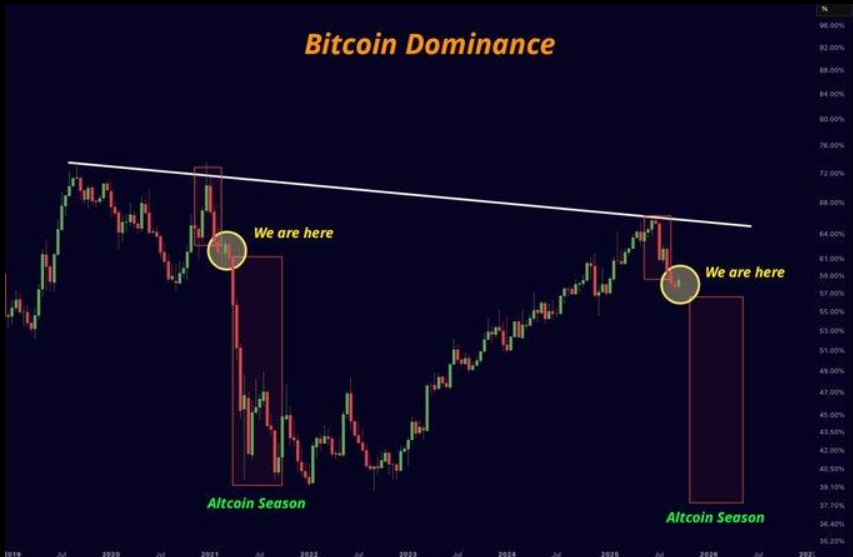
One of the main indicators traders watch during potential altcoin seasons is Bitcoin dominance.
Bitcoin dominance measures how much of the total cryptocurrency market value belongs to Bitcoin compared to the rest of the market.
\text{Bitcoin Dominance} = \frac{\text{Bitcoin Market Cap}}{\text{Total Crypto Market Cap}} \times 100
When Bitcoin dominance begins falling, it can suggest that money is flowing into altcoins instead of staying concentrated in Bitcoin.
Many traders use this metric to identify possible transitions into altseason.
Why Altcoins Move So Aggressively
Altcoins are generally much smaller than Bitcoin in terms of market capitalization and liquidity.
Because of this, relatively smaller amounts of buying pressure can move prices very quickly. During strong altcoin seasons, some projects can rise hundreds or even thousands of percent within short periods.
This extreme volatility is one reason altcoin trading attracts so much attention online.
However, volatility works both ways. Just as altcoins can rise aggressively, they can also collapse extremely fast during market corrections.
The Psychology Behind Altcoin Season
Altcoin seasons are heavily driven by emotion and speculation.
Fear of missing out becomes extremely common as traders watch smaller cryptocurrencies explode in price. Social media fills with screenshots of massive gains, viral predictions, and hype around “the next big coin.”
This emotional environment often attracts inexperienced traders who enter the market late without understanding the risks involved.
Professional traders usually understand that euphoric phases rarely last forever and that market cycles eventually cool down.
Meme Coins and Speculation
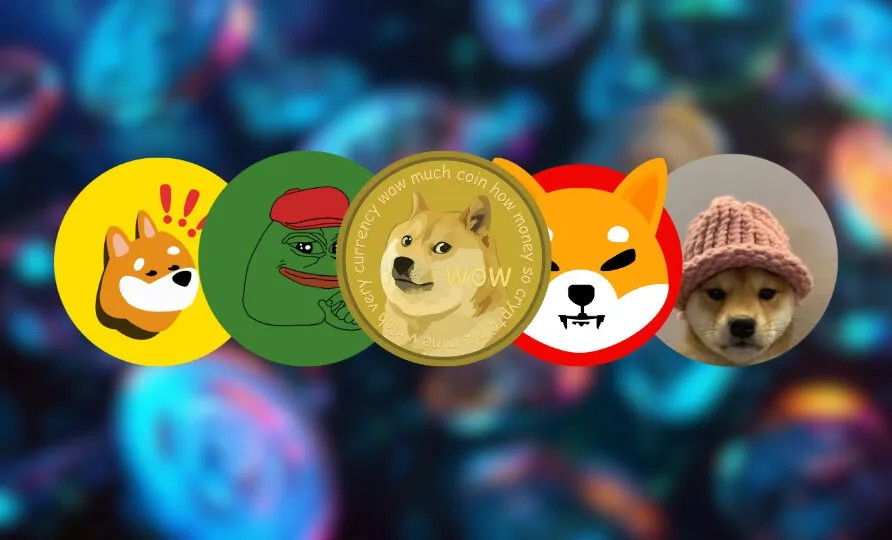
Meme coins often become especially popular during altcoin seasons.
Projects like Shiba Inu or Pepe can experience explosive growth driven mainly by community hype, internet culture, and speculation.
While some traders make enormous profits during these periods, meme coin trading is also considered one of the riskiest parts of the crypto market.
Many projects eventually lose momentum once hype disappears.
The Risks of Altcoin Trading
Although altcoin seasons can create major opportunities, they also involve significant risk.
Many altcoins have lower liquidity, weaker fundamentals, smaller communities, or unproven technology compared to Bitcoin. Some projects disappear completely after bull markets end.
Beginners often make the mistake of chasing coins after massive price increases because they believe prices will continue rising forever.
In reality, sharp corrections are common in crypto markets.
This is why risk management and emotional discipline remain extremely important during altseason.
How Traders Analyze Altcoins
Crypto traders often use platforms such as TradingView and Binance to analyze altcoin trends, volume, momentum, and market structure.
Technical analysis becomes especially important because many altcoins are heavily driven by speculation and short-term sentiment rather than long-term fundamentals.
Experienced traders usually focus on liquidity, market cycles, and risk management instead of blindly chasing hype.
Can Altcoin Season Be Predicted?
No one can predict altcoin season perfectly.
Some traders attempt to identify early signals through Bitcoin dominance, market sentiment, liquidity conditions, and technical analysis. However, crypto markets remain extremely unpredictable.
This is why professional traders focus more on adapting to market conditions and managing risk properly rather than trying to predict every major move.
Historical Examples of Altcoin Seasons
Looking at previous market cycles can help traders better understand how altcoin seasons develop.
One of the most famous altcoin seasons occurred in 2017. During that period, cryptocurrencies such as Ethereum, Ripple (XRP), and many smaller projects experienced enormous price increases as investor interest expanded beyond Bitcoin.
A similar situation happened in 2021 when projects related to decentralized finance (DeFi), NFTs, and meme coins attracted massive attention. During this period, many altcoins significantly outperformed Bitcoin for several months.
Although every market cycle is different, these historical examples show how capital often rotates from Bitcoin into alternative cryptocurrencies when market confidence increases.
Understanding previous cycles can help traders recognize that extreme optimism and extreme pessimism are both recurring parts of the crypto market.
Common Mistakes During Altcoin Season
Many traders make costly mistakes during periods of strong market excitement.
One of the most common errors is buying a coin simply because it has already increased significantly in price. New traders often see social media posts showing large profits and assume the trend will continue indefinitely.
Another frequent mistake is investing too much capital into a single project. Even promising cryptocurrencies can experience sharp corrections without warning.
Some traders also ignore risk management completely because they become overly confident during bullish periods. This often works well temporarily but can lead to significant losses when market sentiment changes.
Successful traders typically focus on protecting capital and maintaining discipline rather than chasing every trending opportunity.
How to Approach Altcoin Season as a Beginner
For beginners, the best approach is usually to focus on education rather than speculation.
Understanding market cycles, risk management, and basic technical analysis is often more valuable than trying to find the next cryptocurrency that could increase dramatically in value.
Many experienced traders prefer to build watchlists, monitor market conditions, and wait for high-quality opportunities instead of entering trades purely because of hype.
It is also important to remember that not every cryptocurrency project survives long term. Researching the fundamentals, development activity, and community behind a project can help traders make more informed decisions.
Patience and discipline are often more valuable than constantly searching for quick profits.
Frequently Asked Questions
Does altcoin season happen every year?
No. Altcoin seasons do not follow a fixed schedule. They are influenced by market cycles, investor sentiment, liquidity, and broader economic conditions.
Is altcoin season good for beginners?
Altcoin season can provide opportunities, but it also involves significant risk. Beginners should be cautious because volatility is often much higher than during normal market conditions.
What is the difference between Bitcoin season and altcoin season?
Bitcoin season generally refers to periods where Bitcoin outperforms most alternative cryptocurrencies. Altcoin season occurs when many altcoins outperform Bitcoin and attract a larger share of investor attention.
Can altcoins outperform Bitcoin?
Yes. During certain periods, many altcoins have generated larger percentage gains than Bitcoin. However, they also tend to carry higher risk and volatility.
Final Thoughts
Altcoin season is one of the most exciting and speculative phases of cryptocurrency markets. It represents periods where alternative cryptocurrencies strongly outperform Bitcoin and attract enormous investor attention.
While altseason can create significant profit opportunities, it can also expose traders to increased volatility, emotional decision-making, and substantial risk.
For beginners, understanding how market cycles work is often more important than trying to predict which coin will rise next. Learning proper risk management, maintaining realistic expectations, and avoiding emotional decisions can help traders navigate these periods more effectively.
Ultimately, successful crypto trading is rarely about chasing hype. It is usually about discipline, patience, research, and understanding how market psychology influences the behavior of investors across the entire cryptocurrency ecosystem.