
Understanding Trend Following
Trend following is one of the oldest and most widely used trading strategies in financial markets. While many beginners try to predict exact tops and bottoms, experienced traders often focus on something much simpler: trading in the direction of the trend.
The idea behind trend following is straightforward. Markets tend to move in trends because of momentum, economic conditions, investor psychology, and institutional activity. Once a strong trend begins, prices can often continue moving in the same direction for much longer than traders expect.
Because of this, trend following has become a popular strategy across forex, stocks, commodities, and cryptocurrency markets.
What Is Trend Following?
Trend following is a strategy where traders attempt to profit by entering trades in the same direction as the current market trend.
In an uptrend, traders look for buying opportunities. In a downtrend, they focus on selling opportunities. Instead of trying to predict reversals, trend followers prefer staying aligned with market momentum for as long as the trend remains active.
This approach is popular because trading with momentum is often easier than constantly fighting against it.
Why Trends Exist in Financial Markets
Trends do not appear randomly. They are usually created by a combination of economic developments, market sentiment, institutional buying or selling, and global events.
For example, strong economic data or positive company news may attract more buyers into the market. As momentum increases, additional traders join the move, which can push prices even higher and create a sustained trend.
The same process can happen in bearish markets when fear and selling pressure dominate.
Trend-following strategies aim to take advantage of these prolonged market movements instead of focusing on short-term fluctuations.
How Traders Identify Trends
One of the most important skills in trend following is learning how to correctly identify market direction.
An uptrend is generally characterized by higher highs and higher lows, showing that buyers remain in control of the market. A downtrend usually forms lower highs and lower lows, indicating persistent selling pressure.
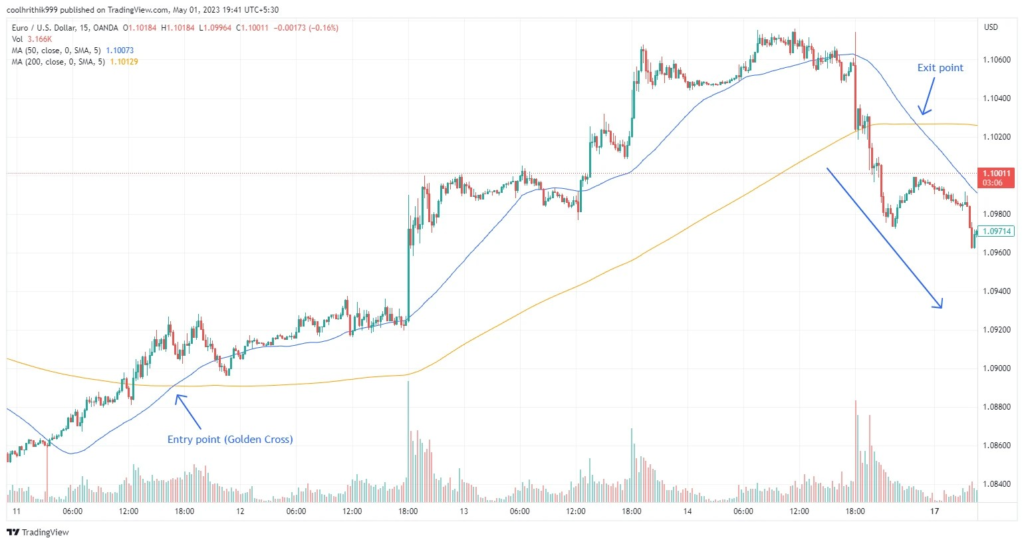
Many traders also use moving averages to help confirm trend direction. When price remains above an important moving average, the market is often considered bullish. When price stays below it, the market may be viewed as bearish.
Tools Used in Trend Following
Trend followers often combine several technical analysis tools to improve their decision-making.
Moving averages are among the most common because they help smooth out price action and highlight market direction more clearly. Traders also frequently use support and resistance levels, trend lines, and market structure analysis.
Some traders combine these tools with momentum indicators such as RSI or MACD to confirm the strength of a trend.
For example, RSI is commonly used to measure momentum conditions.
RSI=100−1+RS100
Even so, experienced trend followers usually focus more on understanding price behavior than relying entirely on indicators.
Pullbacks and Trend Continuation
A common beginner mistake is entering trends too late after a large move has already happened.
Professional trend followers often wait for pullbacks before entering positions. A pullback is a temporary retracement against the main trend that may provide a better entry opportunity.
For example, during a strong uptrend, price may temporarily move downward toward a support level or moving average before continuing higher again. Many traders use these pullbacks to enter trades with smaller stop losses and better risk-to-reward ratios.
This approach helps reduce emotional decision-making and avoids chasing the market impulsively.
Risk Management in Trend Following
Even strong trends can reverse unexpectedly, which is why risk management is extremely important.
Successful trend followers usually focus heavily on stop losses, position sizing, and protecting their capital. One of the main goals of trend following is to keep losses relatively small while allowing profitable trades enough room to develop into larger moves.
Interestingly, many professional trend followers do not aim for very high win rates. Instead, they focus on maintaining discipline and capturing larger winning trades over time.
Advantages and Challenges
Trend following offers several advantages. The strategy is relatively simple to understand, works across many different markets, and can produce large profits during strong trends.
It can also help traders avoid emotional countertrend trades by encouraging them to stay aligned with the overall market direction.
However, trend following also has weaknesses. Markets do not trend all the time, and sideways or choppy conditions can create false signals and difficult trading environments.
Patience is another challenge. Strong trends may take time to develop, and many traders exit profitable trades too early because of fear or impatience.
Psychology Behind Trend Following
Trend following requires strong emotional discipline because human psychology naturally pushes traders to predict reversals or take profits too quickly.
A famous phrase often associated with this strategy is:
“The trend is your friend.”
The idea behind this quote is that following momentum is often more effective than constantly trying to guess when the market will reverse.
Successful trend followers usually focus more on reacting to market conditions than predicting them.
Final Thoughts
Trend following is one of the most respected and effective trading strategies in financial markets. Instead of trying to predict every reversal, trend followers focus on identifying momentum and staying aligned with the market direction.
Although no strategy works perfectly in every situation, trend following can become extremely powerful when combined with patience, discipline, and proper risk management.
Over time, learning how to recognize and follow strong market trends can help traders develop more consistent and structured trading decisions.