
Understanding Blockchain Technology
Blockchain technology is often mentioned alongside cryptocurrencies like Bitcoin and Ethereum, but its importance extends far beyond digital assets. Over the past decade, it has become one of the most influential innovations in finance and technology, attracting the attention of businesses, governments, and developers around the world.
Although the concept may seem technical at first, the idea behind blockchain is surprisingly straightforward. At its core, a blockchain is a secure digital ledger that records information in a transparent and decentralized way, removing the need for a single authority to control or verify every transaction.
Understanding how blockchain works helps explain not only why cryptocurrencies exist, but also why many experts believe this technology could transform industries far beyond finance.
What Is a Blockchain?
A blockchain is essentially a decentralized digital ledger. Instead of being controlled by one company, government, or institution, the information is distributed across a network of computers around the world.
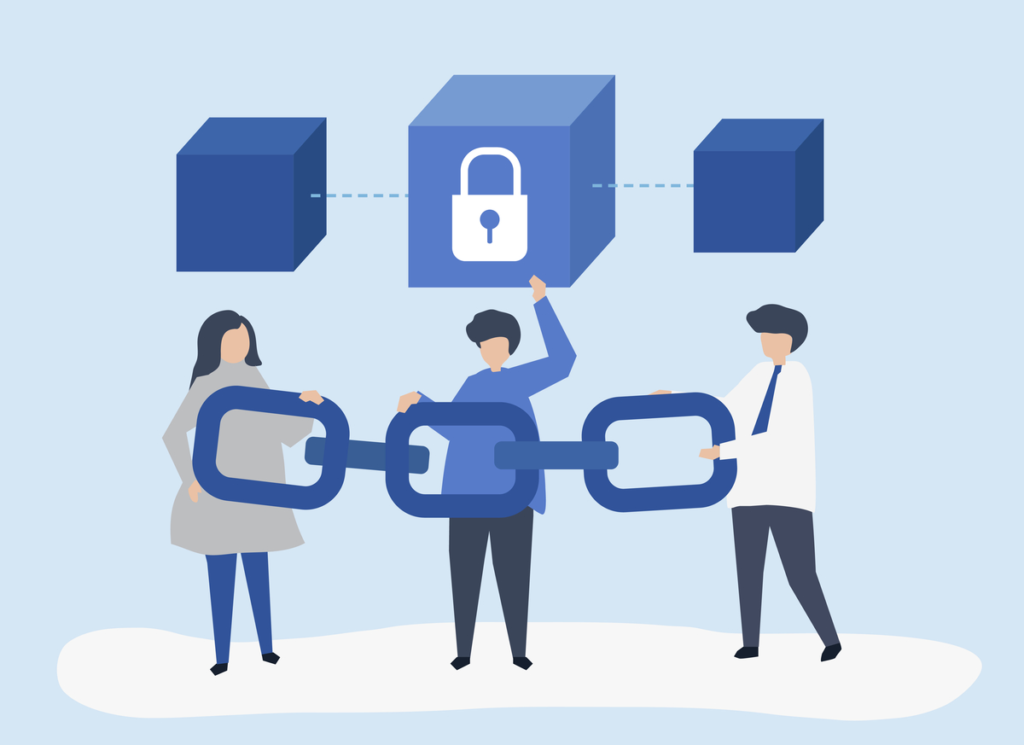
Transactions are grouped into blocks, and each block connects to the previous one, forming a chain of blocks. This is where the term “blockchain” comes from.
Once information is added to the blockchain, changing or deleting it becomes extremely difficult. This structure helps create a system that is transparent, secure, and resistant to manipulation.
How Blockchain Works
When someone sends cryptocurrency, the transaction is broadcast to a decentralized network of computers known as nodes. These nodes verify that the transaction is legitimate and confirm that the sender actually owns the funds being transferred.
After verification, the transaction is added to a new block and permanently recorded on the blockchain. Because the information is distributed across many computers instead of stored in one central database, no single authority controls the system entirely.
This process removes the need for traditional intermediaries such as banks or payment companies.
Why Blockchain Is Considered Revolutionary
Traditional financial systems depend heavily on centralized institutions. Banks process payments, governments issue currencies, and companies control databases and financial records.
Blockchain introduced a different model where trust comes from mathematics, cryptography, and decentralized consensus instead of relying entirely on a single institution.
This creates several potential advantages such as increased transparency, stronger security, global accessibility, and reduced dependence on intermediaries.
Because of this, many people compare blockchain’s long-term potential to the early growth of the internet.
Bitcoin and the Birth of Blockchain
Blockchain technology became globally famous after the launch of Bitcoin in 2009.
Bitcoin used blockchain to create the first decentralized digital currency capable of operating without banks or governments. Before Bitcoin, most digital payment systems depended on centralized companies controlling transactions and balances.
Bitcoin demonstrated that a decentralized financial network could function globally without requiring a central authority.
This breakthrough inspired the creation of thousands of blockchain projects and cryptocurrencies.
Ethereum and Smart Contracts
While Bitcoin focused mainly on digital money, Ethereum expanded blockchain technology much further.
Ethereum introduced smart contracts, which are programs that automatically execute when specific conditions are met. This allowed developers to create decentralized applications, NFT platforms, decentralized finance systems, blockchain games, and many other services directly on the blockchain.
Ethereum transformed blockchain from a payment system into an entire programmable ecosystem.
Why Blockchain Is Secure
One reason blockchain receives so much attention is because of its security structure.
Since data is distributed across many computers worldwide, there is no single point of failure. Altering records becomes extremely difficult because changes would need to be accepted across the network itself.
Cryptography also plays a major role in protecting blockchain systems and validating transactions securely.
However, it is important to understand that while blockchain networks themselves can be highly secure, exchanges, wallets, and user accounts can still become vulnerable if users do not protect themselves properly.
Blockchain Beyond Cryptocurrency
Although blockchain became famous because of cryptocurrencies, many industries are exploring additional uses for the technology.
Potential applications include supply chain tracking, healthcare records, digital identity systems, gaming, voting systems, and real estate transactions.
The main idea is that blockchain could improve transparency and reduce dependence on centralized databases and intermediaries across many industries.
Some experts believe blockchain technology may eventually become part of everyday digital infrastructure.

Public and Private Blockchains
Not all blockchains operate the same way.
Public blockchains such as Bitcoin and Ethereum are open to anyone. Anyone can view transactions, participate in the network, and help validate activity.
Private blockchains work differently because they are controlled by organizations or companies. Access is restricted, and participation is limited to approved users.
Many businesses explore private blockchains for internal operations and enterprise systems.
Criticism and Challenges
Despite its potential, blockchain technology also faces criticism and technical limitations.
Some concerns include scalability problems, energy consumption, slower transaction speeds, regulatory uncertainty, and speculative hype surrounding the industry.
Critics also argue that some projects use blockchain unnecessarily for problems that may not actually require decentralization at all.
Because of this, the blockchain industry continues evolving rapidly as developers search for faster, cheaper, and more efficient solutions.
Blockchain and Crypto Trading
For anyone interested in cryptocurrency trading or investing, understanding blockchain technology provides valuable context. Rather than viewing digital assets as simple price charts, traders who understand the underlying technology are often better equipped to evaluate projects, interpret market developments, and avoid making decisions based solely on hype.
Many traders use platforms such as Binance and TradingView to analyze blockchain-related assets and monitor market activity.
Understanding the underlying technology often helps investors make more informed decisions instead of simply following market hype.
The Future of Blockchain
Blockchain technology is still relatively young compared to traditional financial systems.
Over time, the industry may continue evolving through faster networks, lower transaction costs, broader adoption, and deeper integration into mainstream finance and digital services.
Some people believe blockchain could eventually influence banking, online identity systems, contracts, digital ownership, and global payments on a much larger scale.
Others remain more skeptical and view the technology as highly experimental.
Regardless of opinions, blockchain has already changed the financial and technological world significantly.
Final Thoughts
Blockchain technology introduced a completely new way of storing and transferring information securely without depending entirely on centralized authorities.
By combining decentralization, transparency, and cryptography, blockchain created the foundation for cryptocurrencies and many other digital innovations.
While the technology still faces challenges and uncertainty, its influence on finance and digital systems continues growing rapidly.
For anyone interested in cryptocurrency markets, understanding blockchain is essential because it explains the core technology powering the entire crypto ecosystem.